
Case study · Commercial EICR
Commercial EICR in Highfield, Sheffield S2
Comprehensive electrical inspection of commercial premises in Sheffield
UnsatisfactoryHighfield, Sheffield S2Commercial premisesTwo engineers
Location
Highfield, Sheffield S2
Property
Commercial premises
Inspection
Two engineers, full working day
EICR result
Unsatisfactory
Browse case studies and guides
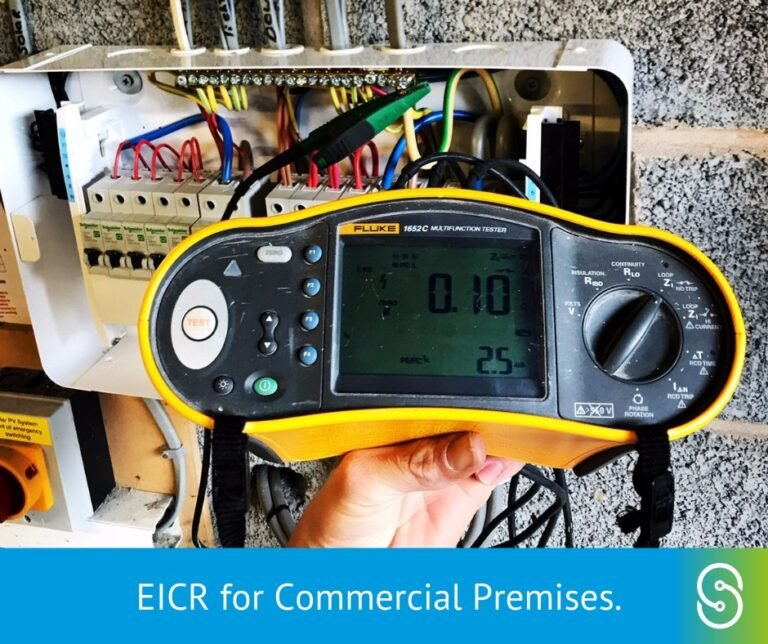
Sheffield EICR recently carried out a comprehensive commercial Electrical Installation Condition Report (EICR) at business premises in Highfield, Sheffield S2.
The premises contained a more complex electrical installation than a typical domestic property, with multiple distribution boards supplying offices, IT and connectivity areas, staff facilities, lighting, kitchen equipment and other electrical equipment.
The inspection was carried out by two engineers over the course of the working day and involved detailed inspection and testing of the existing electrical installation.
The resulting EICR was Unsatisfactory, identifying a number of electrical defects and areas requiring improvement.
What did the commercial EICR find?
Inspection and testing revealed signs of ageing and previous poor-quality electrical work, particularly in areas concealed above the suspended ceilings.
Some of the significant findings included:
Finding 1
Multiple circuits without RCD protection
Including socket circuits, kitchen equipment and a lighting circuit serving the shower-room area.
Finding 2
An open-circuit fault on a large ring final circuit
The circuit supplied approximately 27 socket outlets across several areas of the premises and required investigation and repair.
Finding 3
Poor-quality electrical connections above suspended ceilings
Including taped connections and other terminations requiring proper electrical enclosures and connectors.
Finding 4
Incorrect circuit arrangements serving hand dryers
Two radial circuits had been terminated into a single 32A circuit and required separate appropriate protection.
Finding 5
Missing main protective bonding to the gas service
Requiring installation of the appropriate bonding conductor.
Further observations included exposed cabling where trunking lids were missing, poor lighting connections, a failing and overheating shower-room light, missing earth sleeving and a lighting point without an earth conductor.
Why commercial EICRs need thorough inspection
Commercial electrical installations often develop over many years.
Additional sockets are installed, offices are rearranged, equipment changes and electrical circuits can be altered by different contractors at different times.
From ground level, much of the installation can appear perfectly normal.
However, this inspection demonstrated why proper testing—and inspection of accessible areas above suspended ceilings—can be so important.
Several of the problems discovered weren’t simply visible accessories requiring replacement. They involved the underlying circuit arrangements, electrical connections and protective measures serving the building.
One circuit was serving around 27 socket outlets
One particularly important finding involved a large ring final circuit supplying approximately 27 socket outlets across the kitchen, core room, staff dining area and software room.
Testing identified a continuity fault/open circuit on this circuit.
Rather than simply repairing the immediate fault and leaving the existing arrangement unchanged, our recommendation was to investigate the circuit and consider dividing it into separate circuits.
This could provide a more appropriate arrangement for the different areas of the business while improving the resilience and maintainability of the installation.
RCD protection across the premises
The inspection also identified numerous circuits without additional RCD protection.
These included socket outlets within office areas, kitchen circuits, oven and hob supplies and a lighting circuit serving an area containing a shower.
The remedial recommendations therefore included upgrading the relevant circuit protection using suitable RCBOs, subject to compatibility with the existing distribution equipment and final circuit verification.
Clear advice after the inspection
With a commercial EICR containing numerous observations, simply handing the customer a technical certificate isn’t particularly helpful.
Our role is to establish
- What have we found?
- Why does it matter?
- What needs doing?
- What is recommended rather than mandatory?
Following completion of this EICR, the customer asked Sheffield EICR to provide a quotation for the necessary remedial work.
They specifically requested that the C2 defects and C3 recommendations were identified separately, allowing the different priorities to be clearly understood.
This separation is important.
Not every observation on an EICR carries the same level of urgency, and businesses and landlords should be able to understand the difference when planning remedial electrical work.
Planning remedial work around a working business
Commercial electrical remedial work also requires consideration of how the premises are actually used.
Some electrical work can be completed during normal business hours.
Other work may require circuits or sections of the installation to be isolated, potentially disrupting staff, IT systems or normal business operations.
Our subsequent remedial proposal therefore considered completing non-disruptive work during normal hours and scheduling work requiring more significant isolation outside normal operating hours where necessary.
It’s not simply about identifying electrical defects. It’s about finding a practical way to rectify them.
Commercial EICRs in Sheffield
Sheffield EICR provides commercial EICRs in Sheffield for offices, shops, workplaces and other business premises.
Our electrical inspections include comprehensive testing of the existing installation, clear documentation of any defects identified and practical advice about the next steps.
Where remedial electrical work is required, this is quoted separately following the inspection.
Whether we’re inspecting a house, rental property or complex commercial premises, the objective is the same—to provide an independent assessment of the electrical installation and explain the findings clearly.
Case summary
LocationHighfield, Sheffield
Postcode areaS2
PropertyCommercial premises
ServiceCommercial Electrical Installation Condition Report (EICR)
InspectionTwo engineers, comprehensive inspection and testing
EICR resultUnsatisfactory
Key findingsRCD protection, circuit continuity fault, poor electrical connections, circuit arrangements and protective bonding
Follow-upSeparate remedial quotation with C2 and C3 works clearly identified
Need a commercial EICR?
We’ll plan the inspection around your business and explain every finding clearly.
Or call 0330 043 2031
Our approach
Inspect → Explain → Advise
Our approach to this commercial inspection, and every inspection we carry out.
1
Inspect
Two engineers inspected and tested the installation, including accessible areas above the suspended ceilings.
2
Explain
Every finding was documented clearly, with C2 defects and C3 recommendations identified separately.
3
Advise
Remedial work was quoted separately, with disruptive work planned outside normal operating hours where necessary.
More case studies
Real inspections across Sheffield

Homebuyer EICR · S12
Pre-purchase electrical inspection in Sheffield S12
Hidden defects found while the purchase was still going through, explained in plain English for the buyer to take to the seller.
Unsatisfactory
Read the case study →
Home and Airbnb EICR · S7
EICR for a Millhouses home with Airbnb accommodation
Defects across the house and annex, a plain-English findings report, then remedial work and a fire-alarm installation.
Unsatisfactory
Read the case study →

Landlord EICR · S8
Landlord EICR for a rental property in Sheffield S8
A Satisfactory result with no mandatory remedial work, and no list of unnecessary upgrades.
Satisfactory
Read the case study →
Helping you make confident electrical decisions
Need a commercial EICR in Sheffield?
Professional inspections, honest advice and practical next steps, planned around how your premises actually work.