
Case studies and guides · EICR guide
EICR Sheffield: What It Is, Who Needs One and What’s Involved
What an Electrical Installation Condition Report is, who needs one, how often, and what actually happens on the day. Written for homeowners, landlords, buyers, sellers and businesses across Sheffield.
HomeownersLandlordsBuyers and sellersBusinesses
Landlords
At least every 5 years, by law
Homeowners
Every 10 years recommended
Businesses
Usually every 5 years
Buying or selling
Recommended before you commit
Browse case studies and guides
What is an EICR?
An EICR, or Electrical Installation Condition Report, is a detailed check of the fixed electrics in a property: the consumer unit (fuse box), the wiring, sockets, switches, light fittings and anything else that’s wired in. A qualified electrician inspects and tests the installation, then records what they find in a formal report.
You might hear it called a landlord electrical certificate, a periodic inspection or an electrical safety certificate. Whatever the name, the purpose is the same: to find out whether the electrics are safe for continued use, and what, if anything, needs attention.
What does an EICR check?
An EICR looks at
- The consumer unit and its protective devices: fuses, MCBs, RCDs and RCBOs
- Earthing and bonding, including the main bonding to gas and water pipes
- Wiring and circuits, for damage, wear, overloading and continuity faults
- RCD protection, and how quickly it trips
- Sockets, switches and light fittings, for damage and signs of overheating
- Earlier DIY or alterations that don’t meet current safety standards
An EICR covers the fixed installation only. Plug-in appliances such as kettles and TVs aren’t part of it. Checking those is PAT testing.
Who needs an EICR?
Landlords
Landlords
In England, private landlords must have the electrics in a rented property inspected and tested at least every five years. Since May 2026 the same rule covers all social housing too.
Visit the Landlord Hub →
Homebuyers
Buying or selling a home
There’s no legal requirement when a home changes hands, but it’s one of the most useful checks you can make. A survey only looks at the electrics. An EICR tests them.
Visit the Homebuyer Hub →
Homeowners
Homeowners
For a home you own and live in, the recommended maximum gap is ten years. It’s also worth having one if you’ve just moved in, your fuse box is old, or you’re planning a renovation, extension or EV charger.
Visit the Homeowner Hub →
Businesses
Businesses
Business owners have a legal duty to keep electrical systems safe for staff and visitors. A regular commercial EICR is how most businesses show they’re doing that, and insurers often ask to see one.
Visit the Business Hub →
How often do you need an EICR?
| Property | Recommended maximum interval |
|---|---|
| Privately rented home (England) | At least every 5 years, or sooner if the last report says so. Legal requirement. |
| Social housing (England) | At least every 5 years. Legal requirement for all social tenancies since May 2026. |
| House in multiple occupation (HMO) | At least every 5 years |
| Home you own and live in | Every 10 years, and when the property changes hands |
| Offices, shops, restaurants and hotels | Every 5 years |
| Industrial premises | Every 3 years |
These are maximums. The electrician writes the date of your next inspection on the report itself, and it can be sooner if the installation is older or showing wear. A change of tenant or owner is also a good time for a fresh inspection.
What happens on the day?
1
Before we arrive
We agree access, what’s included and any limitations, such as rooms we can’t get into or areas we can’t safely reach.
2
Visual inspection
We check the consumer unit, wiring, sockets, switches and fittings for damage, wear, overheating and anything that doesn’t meet current standards.
3
Testing
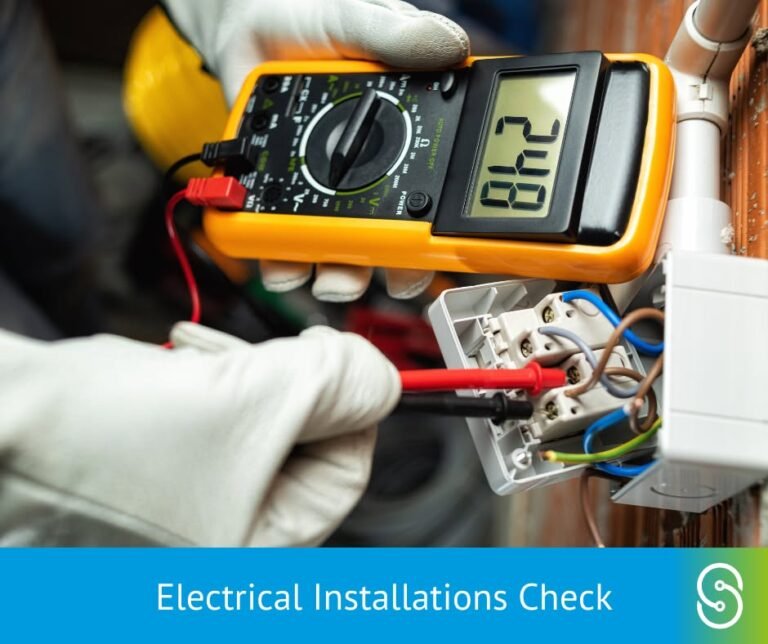
We test the circuits with specialist equipment: continuity, insulation resistance, polarity, earth fault loop impedance and RCD operation. The power will be off for parts of this, so it’s worth planning around.
4
The report
Every observation is recorded and given a code, and the report gives an overall result: Satisfactory or Unsatisfactory.
5
Findings explained
We explain what we found, why it matters and what your options are. Any remedial work is quoted separately, so you can decide what happens next.
How long it takes depends on the size of the property, how many circuits it has and what condition it’s in. Most homes take a few hours. Larger houses and commercial premises take longer: our Highfield commercial inspection took two engineers a full working day.
Understanding EICR codes
Each problem the electrician finds is given a code, so you can see at a glance how urgent it is.
C1
Danger present
There’s a risk of injury now. Immediate action is needed, and the electrician will usually make it safe there and then.
C2
Potentially dangerous
Not an immediate danger, but it could become one. Urgent remedial work is needed.
C3
Improvement recommended
Doesn’t meet current standards but isn’t classed as unsafe. Worth planning for, and not a fail on its own.
FI
Further investigation
Something needs looking into further before it can be properly assessed, usually without delay.
UnsatisfactorySatisfactory
Any C1, C2 or FI makes the overall result Unsatisfactory. A report with only C3 recommendations, or none at all, is Satisfactory.
What if my EICR is Unsatisfactory?
An Unsatisfactory result means work is needed to make the installation safe. It doesn’t automatically mean a rewire. Often it’s a handful of specific defects, such as a missing bond, a faulty RCD or an older fuse board without RCD protection.
Once the work is done, the electrician certifies it, so you have a complete record alongside the original report. For homeowners there’s no legal deadline, but C1 and C2 items should be dealt with promptly.
Landlords in England must
- Have the electrics inspected and tested at least every five years
- Give existing tenants a copy of the report within 28 days of the inspection
- Give new tenants a copy before they move in
- Give a prospective tenant a copy within 28 days of them asking
- Give the council a copy within 7 days if it asks
- Complete any remedial work within 28 days, or sooner if the report says so, then confirm it in writing to tenants and the council
Councils can fine landlords up to £30,000 for each breach. Our Landlord Hub explains how we help you stay on top of it.
Buying or selling a home in Sheffield?
A standard survey only looks at the electrics. If your surveyor has recommended an electrical inspection, it’s because many problems can’t be found without testing.
For buyers, an EICR means you know about any electrical work before you commit, and you can take the findings into your negotiations, just as our S12 homebuyer did. For sellers, a recent report can answer a buyer’s questions before they’re asked. Our Homebuyer Hub has more on the Homebuyer Electrical Report™.
Who can carry out an EICR?
An EICR should be carried out by a qualified and competent electrician with the right test equipment and experience of inspection work. Many electricians are registered with a government-approved scheme such as NAPIT or NICEIC, which you can check on the scheme’s own website.
The inspection should follow the current edition of BS 7671, the IET Wiring Regulations, and the report should come on the standard EICR form, with every observation coded and explained.
How Sheffield EICR does it
Inspect → Advise → Deliver
We don’t just hand you a technical certificate. We inspect and test the installation properly, explain the findings in plain English, separate what’s urgent from what can wait, and quote any remedial work separately.
If nothing needs doing, we’ll tell you that too, like the Satisfactory result in our S8 landlord case study.
In this guide
Need an EICR in Sheffield?
Professional inspection and testing, with a clear report and honest advice on what to do next.
Or call 0330 043 2031
Frequently asked questions
Your EICR questions answered
How long does an EICR last?
For a rented home in England, a maximum of five years. For a home you own and live in, up to ten years is recommended. The date of your next inspection is written on the report, and it can be sooner depending on what’s found.
Is an EICR the same as an electrical safety certificate?
People often call it that, but strictly it’s a report rather than a certificate. It records the condition of the installation and whether it’s safe for continued use.
How long does an EICR take?
It depends on the size of the property and how many circuits it has. Most homes take a few hours, while larger houses and commercial premises take longer. We’ll give you an idea of timings when you book.
Will my power be off during the inspection?
For parts of it, yes. Testing means switching circuits off, so we’ll let you know beforehand and keep the disruption to a minimum.
Does an EICR include my appliances?
No. An EICR covers the fixed installation. Plug-in appliances are checked with PAT testing, which we also offer.
What happens if my EICR fails?
The result will be Unsatisfactory and the report will list what needs doing. We’ll talk you through each item and quote any remedial work separately, so you can decide how to proceed.
Do I need an EICR to sell my house?
No, it isn’t a legal requirement. But many buyers’ surveyors recommend one, and having a recent report can help a sale go smoothly.
Do you cover Kiveton Park?
Yes. As well as Sheffield itself, we carry out EICRs in Kiveton Park and other nearby areas. See the list below, or speak to an advisor if you’re not sure.
Case studies
Real EICRs from across Sheffield
See what our inspections found, and how we explained it, for homebuyers, homeowners, landlords and businesses.

Homebuyer EICR · S12
Pre-purchase electrical inspection in Sheffield S12
Hidden defects found while the purchase was still going through, explained clearly for the buyer to take to the seller.
Unsatisfactory
Read the case study →
Home and Airbnb EICR · S7
EICR for a Millhouses home with Airbnb accommodation
Defects across the house and annex, a clear findings report, then remedial work and a fire-alarm installation.
Unsatisfactory
Read the case study →

Landlord EICR · S8
Landlord EICR for a rental property in Sheffield S8
A Satisfactory result with no mandatory remedial work, and no list of unnecessary upgrades.
Satisfactory
Read the case study →
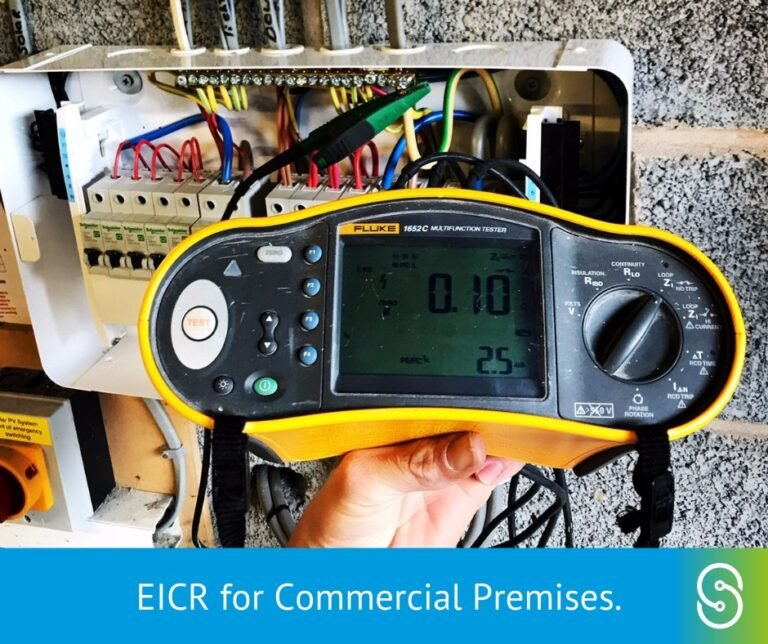
Commercial EICR · S2
Commercial EICR in Highfield, Sheffield S2
Two engineers, a full working day and findings above the suspended ceilings, with C2 and C3 works quoted separately.
Unsatisfactory
Read the case study →
Areas we cover
EICRs across Sheffield and nearby
We carry out EICRs for homeowners, landlords, buyers, sellers and businesses across Sheffield and South Yorkshire, including Kiveton Park.
Not sure if we cover you? Give us a call and we’ll let you know.
SheffieldKiveton ParkHeeleyHighfieldMeersbrookMillhousesWoodseatsDore and TotleyCrookesWalkleyHillsboroughStocksbridgeMosborough
Helping you make confident electrical decisions
Need an EICR in Sheffield or Kiveton Park?
Professional inspections, honest advice and a clear report you can actually use.